

%2011_07_24%20.jpg?im=FeatureCrop,algorithm=dnn,width=1080,height=607&w=860&resize=860,0&ssl=1)
The Union Budget 2026-27, presented by Finance Minister Nirmala Sitharaman on Sunday, estimates a total expenditure of Rs 53.5 lakh crore and sets a gross revenue target of Rs 44.04 lakh crore.
In the Budget documents, the Centre has detailed the proportionate breakdown of the various taxes it levies to accumulate the funds required to execute its plans, as well as where these funds are majorly spent. Here’s an overview of how the government earns and spends every rupee.
How The Centre Makes Its Money
Photo Credit: Government of India
Borrowings and liabilities account for 24% of the government’s total revenue collection. This consists of funds raised through market borrowings, treasury bills, loans and bonds from the Reserve Bank of India or foreign entities such as international organisations and countries.
Its second major revenue source is the income tax that it levies on individuals and businesses, contributing 21% to the total mop-up. The third most prominent avenue is through the Goods and Services Tax, which is the indirect dues levied on a product or service that invididuals purchase.
The fourth most notable source is non-tax revenue such as administrative fees, fines and penalties as well as interest on loans, and dividends from public sector enterprises, which cumulatively contribute 10%.
Central excise duties account for 6%, followed by customs duty at 4%. Non-debt capital receipts, which consist of the funds that the government receives from reducing assets and recovering loans, stand at 2%.
How The Centre Spends Its Money
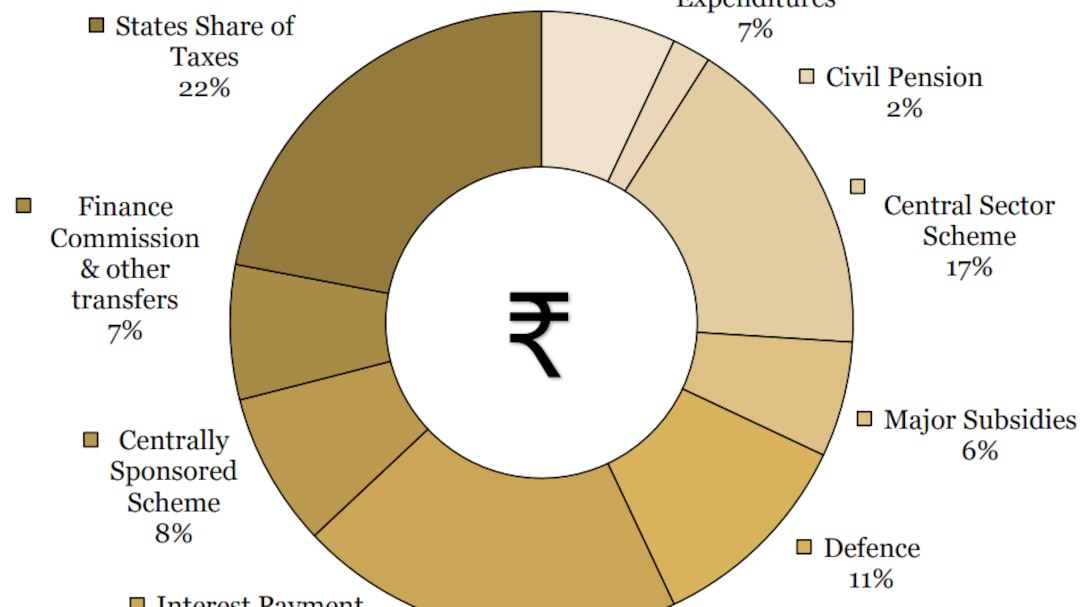
Photo Credit: Government of India
The Centre spends the majority of its capital on the states’ shares of taxes at 22%, while the second biggest spending outlay is for interest payments on bonds, loans and other financial instruments at 20%. The central sector schemes take up 17% of the funds, while defence expenditure takes up 11%.
Major subsidies take up 6%, while civil pension payments make up 2% of the expenditure.
ALSO READ: Track all the live updates related to Budget 2026
(Except for the headline, this story has not been edited by NDTV staff and is published from a press release)
Comprehensive Budget 2026 coverage,
LIVE TV analysis,
Stock Market and
Industry reactions,
Income Tax changes and
Latest News on NDTV Profit.

