


Many seasoned investors focus on companies that appear undervalued yet possess strong balance sheets and long-term growth potential.
One metric that often stands out is book value. A high book value not only reflects financial stability but also hints at intrinsic worth that the market may not have fully recognised.
For investors willing to take calculated risks, here are three high book value penny stocks to keep on your watchlist.
Elpro International operates across multiple sectors, including electrical equipment manufacturing, real estate, investments, and renewable energy through windmills.
The company was established in partnership with General Electric (GE), USA, and is known for its surge protection technology and zinc oxide disc production based on GE’s globally recognised technology.
The company’s latest book value per share stands at ₹120.2, while the stock is currently trading at just ₹92. This means it’s priced at a price to book (PB) ratio of 0.8.
Elpro’s revenue grew at a 3-year CAGR of 59.6%, while net profit expanded by 63%. Going forward, it plans to scale up operations in real estate and equity investments.
South Indian Bank operates through four key segments—treasury (investment portfolio, FX operations, and investment gains/losses), corporate/wholesale banking (loans to corporates), retail banking (loan products for non-corporate customers), and other banking (para-banking services such as debit cards and third-party product distribution).
Its book value per share is ₹39.8 against a current price of ₹29.7, implying a PB ratio of 0.75. In the June 2025 quarter, the bank reported total income of ₹29.8 billion, up 9% year-on-year, while net profit rose 9.5% to ₹3.2 billion.
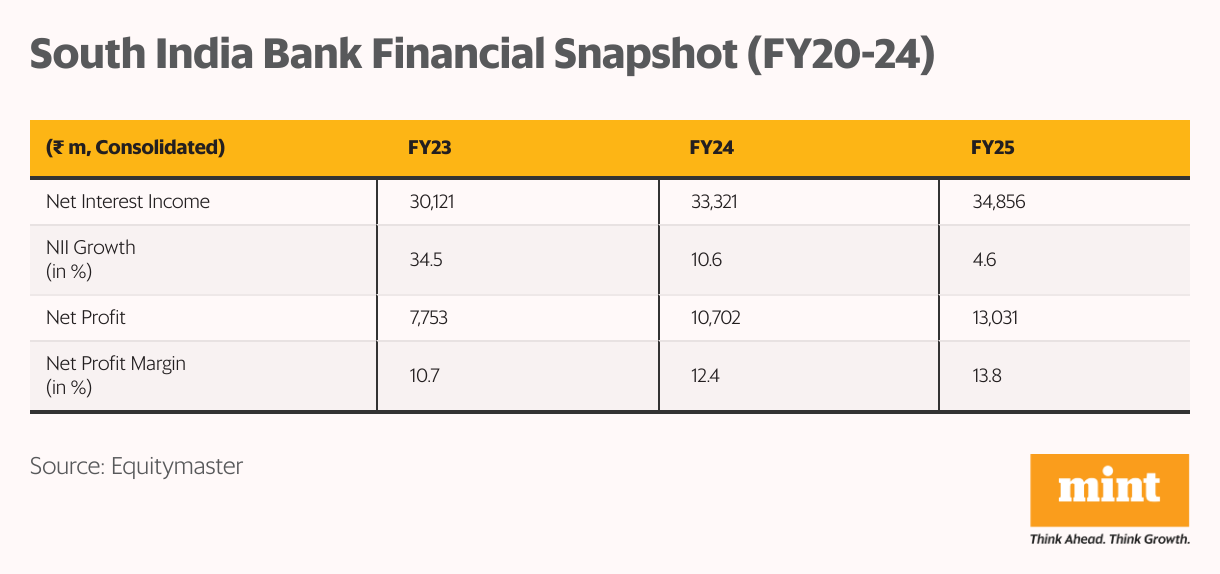
From FY23 to FY25, net interest income grew at a CAGR of 7.6%, while net profit surged at 29.6% CAGR.
Looking ahead, the bank aims to accelerate loan growth to 12%+ in FY26, focusing on MSME and retail, with deposits expected to grow 10-11%.
Coffee Day Enterprises operates across coffee and related businesses, integrated multimodal logistics, financial services, and commercial real estate leasing, with its flagship Café Coffee Day brand present not only in India but also in Austria, Czech Republic, Malaysia, Nepal, and Egypt.
The company’s book value per share stands at ₹122.6 against a current price of ₹38.3, reflecting a PB ratio of 0.31.
The stock is also part of Dolly Khanna’s portfolio. As of June 2025, she held 32.78 lakh shares (1.55% equity stake).
For FY25, consolidated income was ₹11,256.4 million, marginally higher than FY24. The company reported a net loss of ₹1,432 million, significantly narrower than ₹3,074.3 million in FY24.
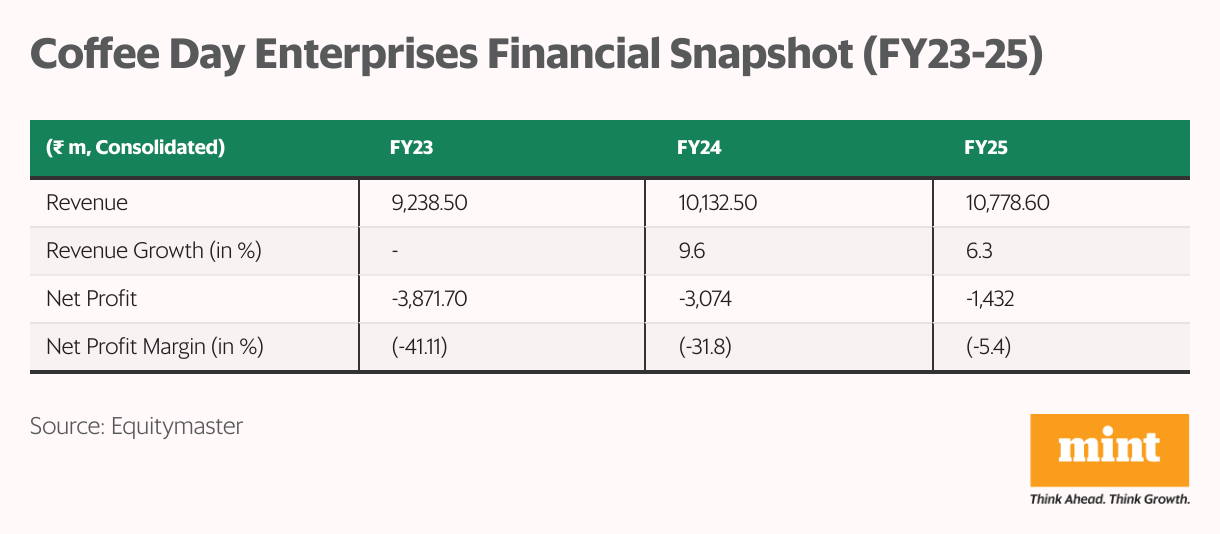
Over the past three years, Coffee Day has shown steady revenue growth and narrowing losses. Going forward, it plans to reduce debt and strengthen its financial position.
According to its FY24 annual report, India’s coffee market is gaining momentum with rising demand for premium, artisanal brews and café experiences—a trend the company hopes to leverage in re-establishing its brand.
Conclusion
High book-value penny stocks can look attractive as they may trade below intrinsic worth. Many such businesses hold valuable assets—cash, machinery, or land—that can provide resilience in tough times.
However, book value alone doesn’t guarantee success. Companies may still face losses, or their assets may not be worth what they appear on paper. On top of this, penny stocks often carry high volatility, low liquidity, and elevated risk.
Investors should therefore conduct thorough research, not just on financials, but also corporate governance, before making decisions, ensuring alignment with their own goals and risk appetite.
Happy Investing.
Disclaimer: This article is for information purposes only. It is not a stock recommendation and should not be treated as such.
This article is syndicated fromEquitymaster.com

