


This surge gave SMEs, which had long struggled with limited funding options, a fresh way to raise capital. As investor demand and supply of initial public offers (IPOs) fed off each other, subscriptions skyrocketed, often accompanied by sharp post-listing gains.
Concerns soon emerged that the market was veering into bubble territory, with valuations detached from business fundamentals. Following regulatory intervention by the Securities and Exchange Board of India (Sebi) earlier this year—like mandatory profitability and tighter controls— the market has now entered a new phase.
Listing surge
Since 2012, when Sebi introduced a new framework for SMEs to raise funds, the SME IPO market has undergone three broad phases: an early, nascent period, a slowdown, and a sharp post-pandemic acceleration. Activity first peaked in 2018, then contracted in 2019 and 2020 as fundraising fell sharply in line with the broader risk-off environment. The post-covid period saw both the number of issues and funding value rise rapidly.
This is not the first time SMEs have had a platform to raise funds. Earlier attempts, such as OTCEI in 1990 and the INDO NEXT platform in 2005, saw limited traction. This time, Sebi designed it around “light-touch” access, lowering the entry threshold for issuers relative to the mainboard. The broader environment had changed, too.
Since their launch, the SME platforms of the BSE and the National Stock Exchange (NSE) have both seen over 650 issues. The average IPO size has grown to ₹43.43 crore this year so far, up from ₹36.50 crore in 2024 and ₹25.75 crore in 2023.
Retail wave
The rise in SME IPOs was driven by several interconnected factors. A demographic shift and new technology pulled more people into the financial markets. Households moved more of their savings into financial assets, reflected in the growth of demat accounts.
The number of such accounts grew at a rate of 23% per year over the past decade, increasing from 23.3 million in March 2015 to 192.4 million in March 2025. The change has been especially sharp since 2020. NSDL alone now records 42.3 million active investors.
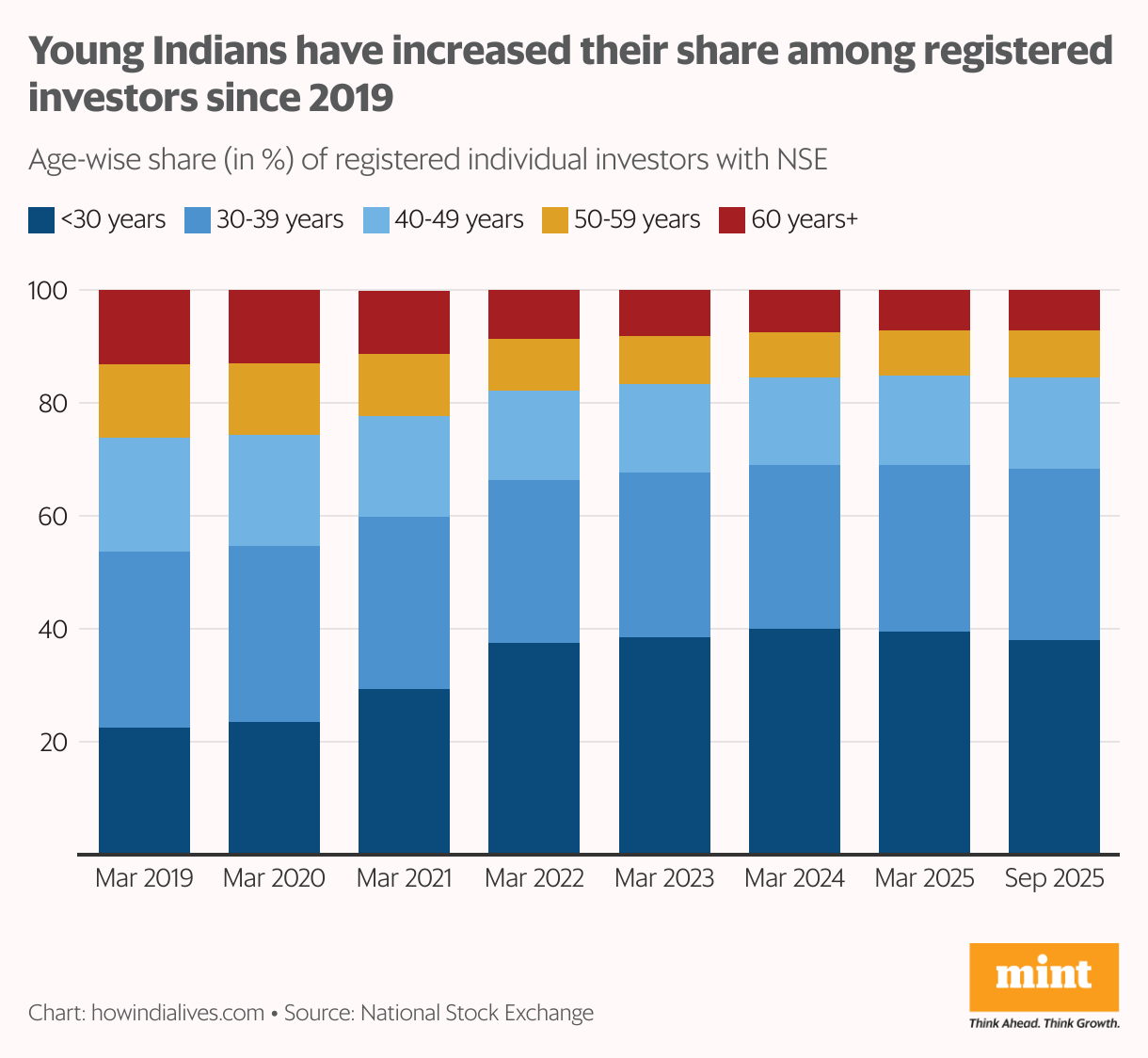
Younger investors gave a big thrust to this growth. The share of those under 30 among the registered individual investors on the NSE rose from 22.6% in March 2019 to 38% in September 2025, and the median age dropped from 38 to 33 during this period. This group takes more risk and fits naturally into SME IPOs.
Simultaneously, the market saw the rise of fintech platforms. Discount brokers control 64.6% of the industry, and Groww, Zerodha, and Angel One account for more than 57% of active NSE demat accounts. UPI’s higher ₹5 lakh limit enabled larger IPO applications, and several states provided subsidies that reduced SME listing costs.
Demand spike
The convergence of a fast-growing, lightly regulated listing platform and a large, tech-enabled retail base led to concerns about how demand was shaping the market. The last two years showed signs of overheating: very high subscription levels, a widening gap between demand and fundamentals, and a pattern in which strong listing-day gains drew more applicants into later issues.
Oversubscription reflected this shift. After averaging 12 times in 2021, subscription levels rose sharply and crossed 200 times on average by 2024. Some IPOs went far beyond these levels. HOAC Foods and NACDAC Infrastructure saw demand exceed 2,000 times, while several smaller issues crossed the 100-times mark. Even companies with limited track records drew heavy interest because earlier SME listings had delivered quick gains.
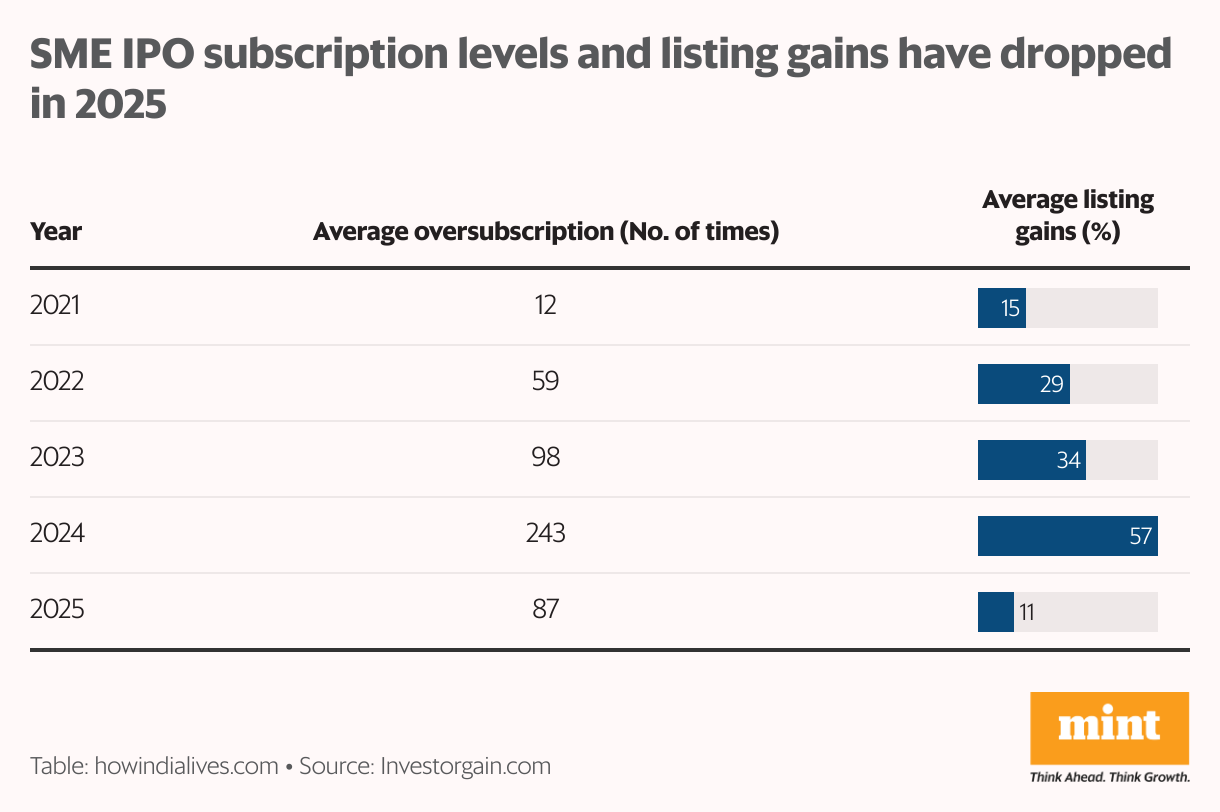
These trends reinforced each other. Average listing-day returns rose from about 30% in 2022 to more than 50% in 2023 and 2024, attracting more retail applicants. The higher UPI limit enabled larger bids, and many investors applied to multiple issues at once, creating a cycle in which subscription levels often outweighed fundamentals.
Policy reset
Strong listing gains in SME IPOs masked a sharp contradiction. By mid-2025, many new listings were trading below issue price—28 of 50 on the BSE SME platform and 22 of 55 on NSE Emerge. A report in the latest Reserve Bank of India bulletin noted a pattern of “sharp listing gains followed by negative returns”, especially in IPOs with heavy retail participation. Valuations in several cases were also well above sector norms.
Index data showed similar distortions. The S&P BSE SME IPO Index delivered a five-year return of 7,418%, compared with 93% for the Sensex (as of 13 November), reflecting an illiquid market where a few stocks drove sharp moves rather than broad fundamentals.
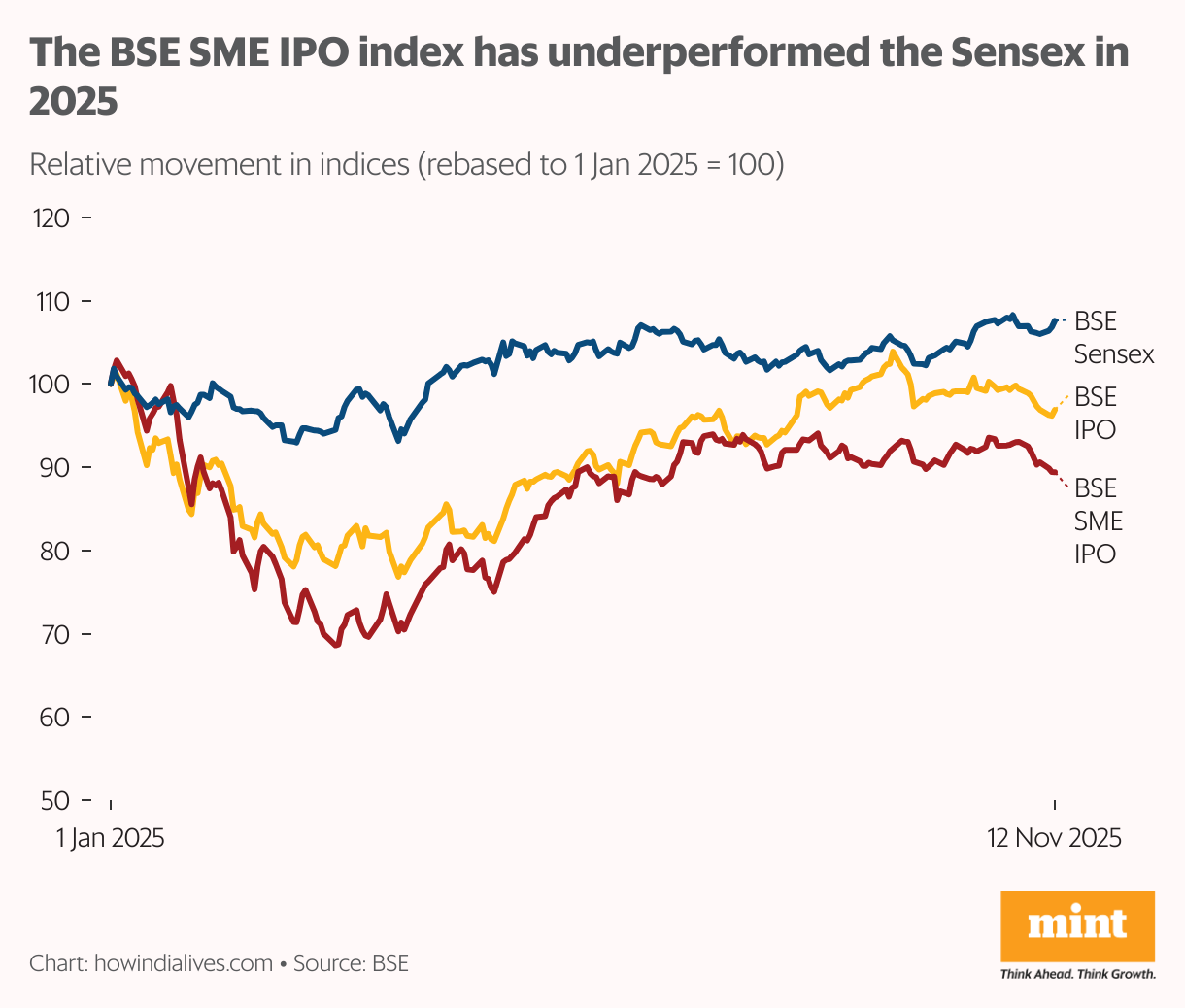
By late 2024, Sebi shifted focus toward investor protection. Officials warned of “irrational exuberance” and “fraudulent trade practices,” cancelled one IPO, and issued a consultation paper to review the framework.
New rules in early 2025 introduced mandatory profitability, tighter controls on fund use, limits on offer-for-sale, longer promoter lock-ins, and a 21-day public comment period, aiming to curb misuse and strengthen market discipline. This year, the returns have cooled down.
Credit gap
The SME IPO boom and its correction sit against India’s long-standing MSME credit gap. A May 2025 report from CareEdge Ratings pointed out that India has about 63 million MSMEs with a total debt demand of ₹95.6 trillion.
Of this, ₹50.7 trillion is considered addressable through formal channels such as banks and NBFCs. However, as of the first half of FY25, formal lenders had supplied only ₹32.4 trillion, leaving a credit gap of ₹18.3 trillion.
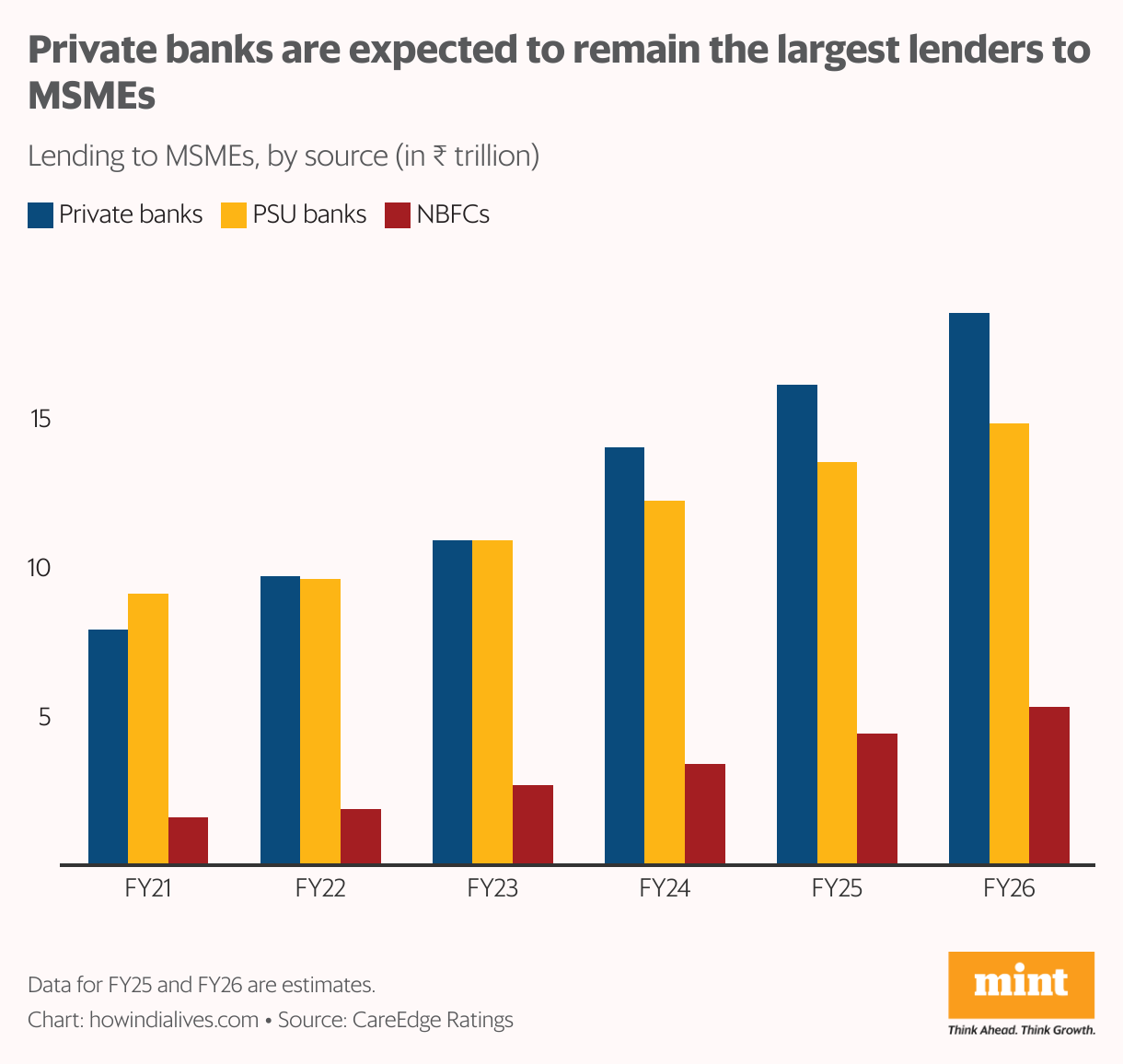
While the loans from banks and NBFCs are expected to grow by nearly 14% in FY26, with about 48% of the amount coming from private banks, the credit gap is still huge. This persistent gap is what pushed many SMEs toward the light-touch IPO platform, and explains why the IPO boom intensified once retail investor demand surged.
With Sebi’s new profitability and governance rules limiting IPO access for smaller firms, unmet demand is likely to shift further toward NBFCs and private credit.
www.howindialives.com is a database and search engine for public data.

