


In a recent LinkedIn post, Zerodha CEO Nithin Kamath cited a study by Elm Wealth in which 118 finance students were given the first page of the Wall Street Journal a day in advance for trading. They got the direction right about half the time but faltered on risk management. Half lost money, and 16% went bankrupt. They earned a paltry 3.2% on average, compared to a 130% average return by five experienced traders.
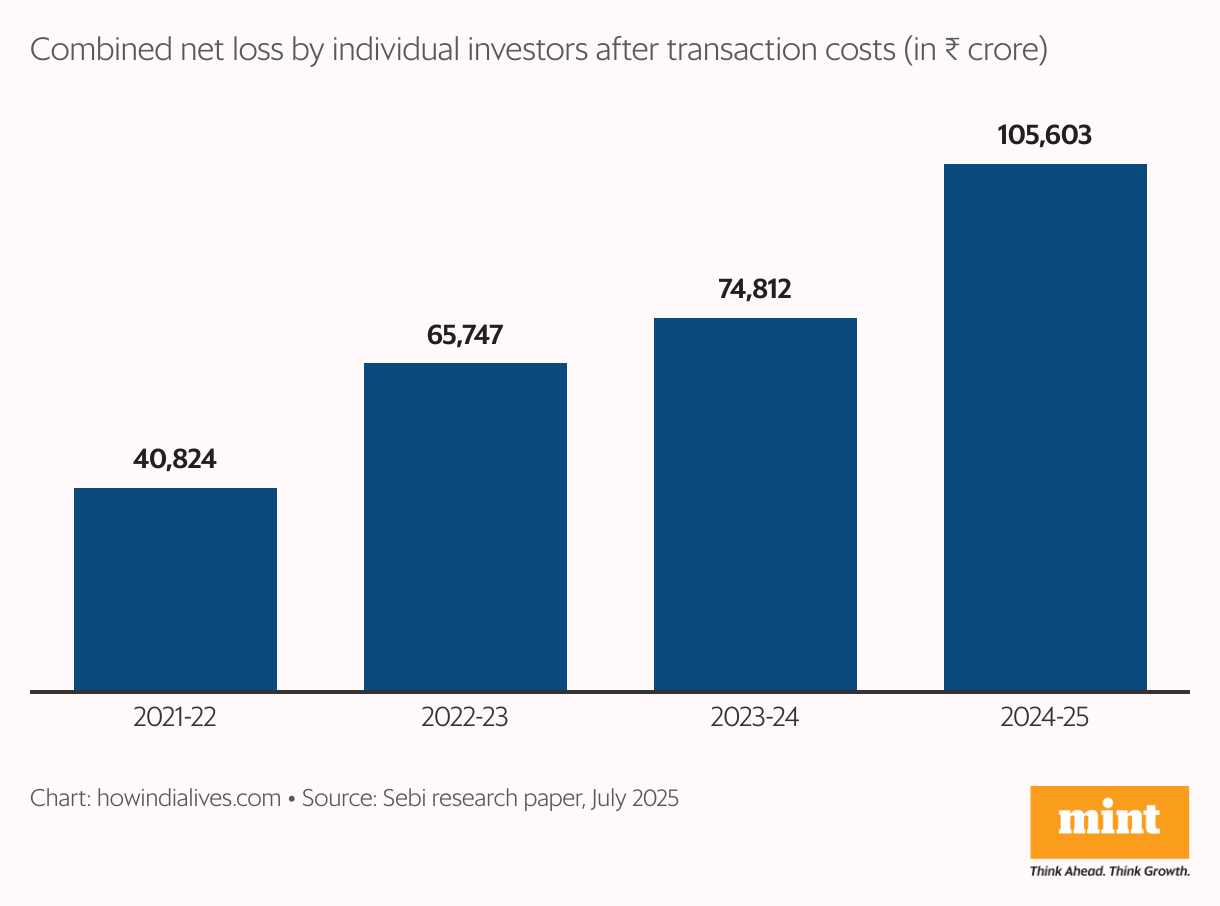
Markets regulator Sebi has similar thoughts about small investors. Its latest research on the performance of individual traders in Indian derivatives showed 90% lost money for the fourth straight year. These 9.6 million individuals collectively blew ₹1.05 trillion in 2024-25. The number of trades has grown 2.2 times since 2021-22, and losses have increased 2.6 times, reflecting the higher risk investors have been taking in search of quick gains since the pandemic.
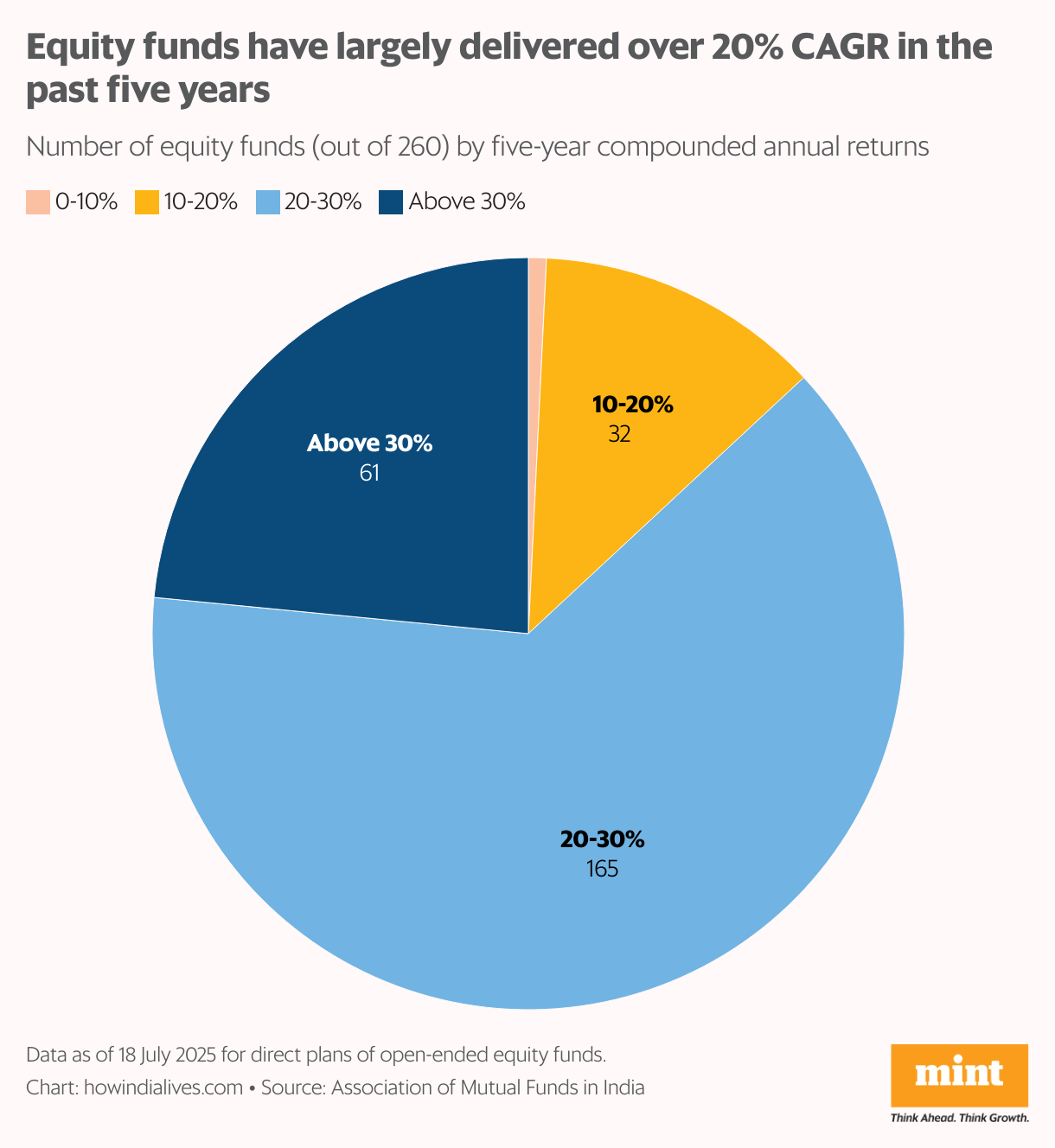
Another type of investing has also grown during this period: the mutual fund systematic investment plan (SIP), which requires more discipline but is also far more rewarding in the long term. More than 90% of open-ended equity funds have delivered a compound annual return of over 20% in the past five years.
Cash contraction
Despite yawning gaps in performance, small investors continue to flock to short-term trading. Many are into derivatives or the cash segment, where they take positions in stocks that they square off the same day. A Sebi research paper released in July 2024, which studied the behaviour of 6.9 million individual investors in the cash segment, showed about 36% were also conducting intra-day trading. The performance of these individual day traders was poor: 70% made losses in such trades, and the figures were similar over three periods.
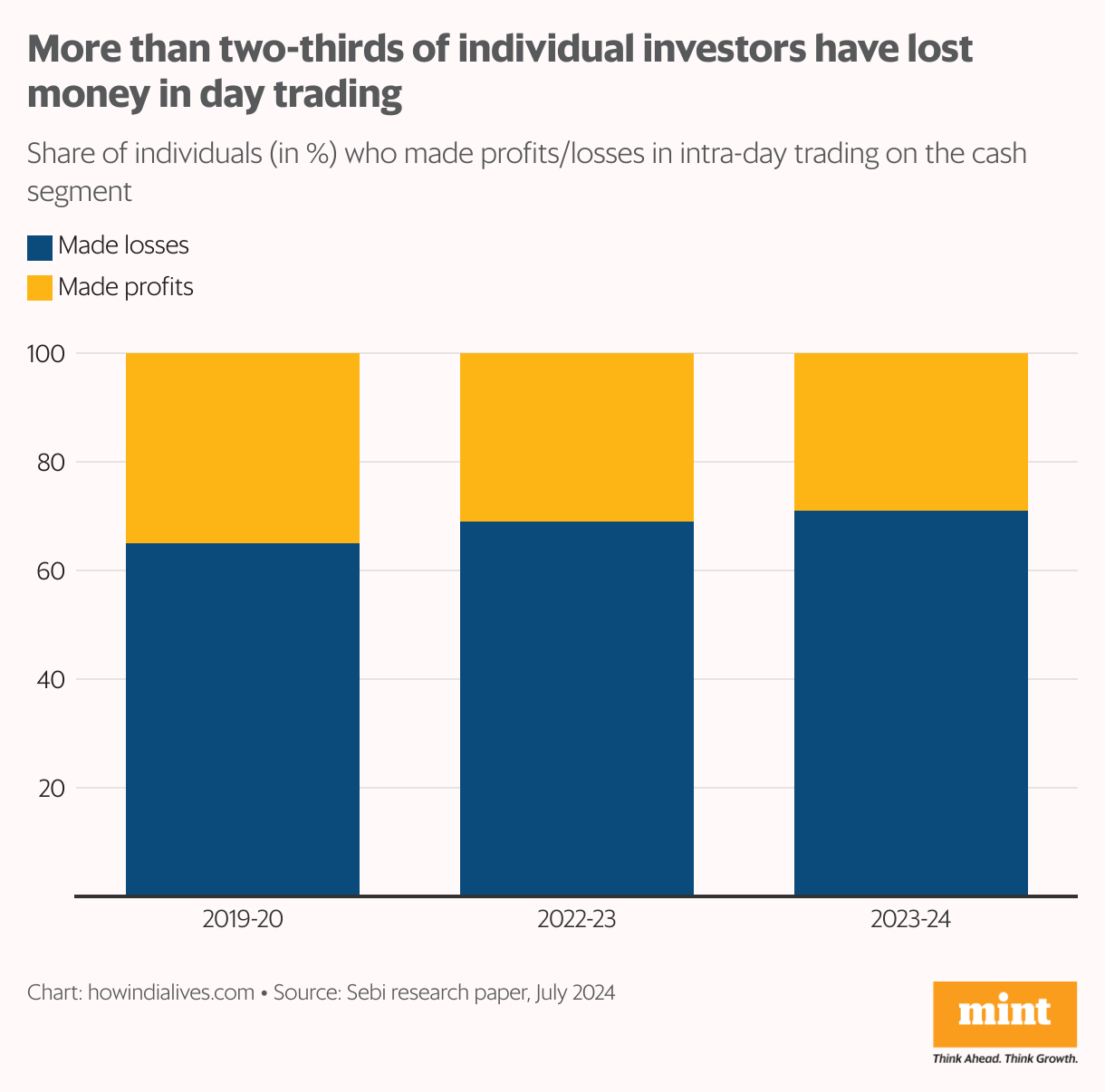
The share of such traders aged below 30 increased from 18% in 2019-20 to 48% in 2023-24. Over this period, investor participation increased three-fold in tier-I cities, five-fold in tier-II towns, and 10-fold and tier-III towns.
IPO flipping
A similar penchant for short-term returns is seen in initial public offerings (IPOs)—the first time a company sells shares to the general public. Retail investors—those who applied for less than ₹2 lakh worth of shares in a public issue—sold about 43% of shares (in value terms) allotted to them within a week of listing, a Sebi study in September 2024 showed. By comparison, qualified institutional buyers sold only about 20% of their allotment within a week.

The Sebi study covered 144 IPOs and 9.27 million unique shareholders (9 million retail investors) between April 2021 and December 2023. Many were new to the market, with about 48% of the underlying demat accounts opened between 2021 and 2023. They also had a tendency to quickly sell IPO shares that made gains while holding on to those that were losing money.
Disciplined investing
The number of demat accounts in India shot up from about 40 million in December 2019 to about 192 million in March 2025. The number of operational SIPs has tripled from about 31 million in March 2020 to about 92 million in June 2025, while SIP assets grew about 6.4 times.
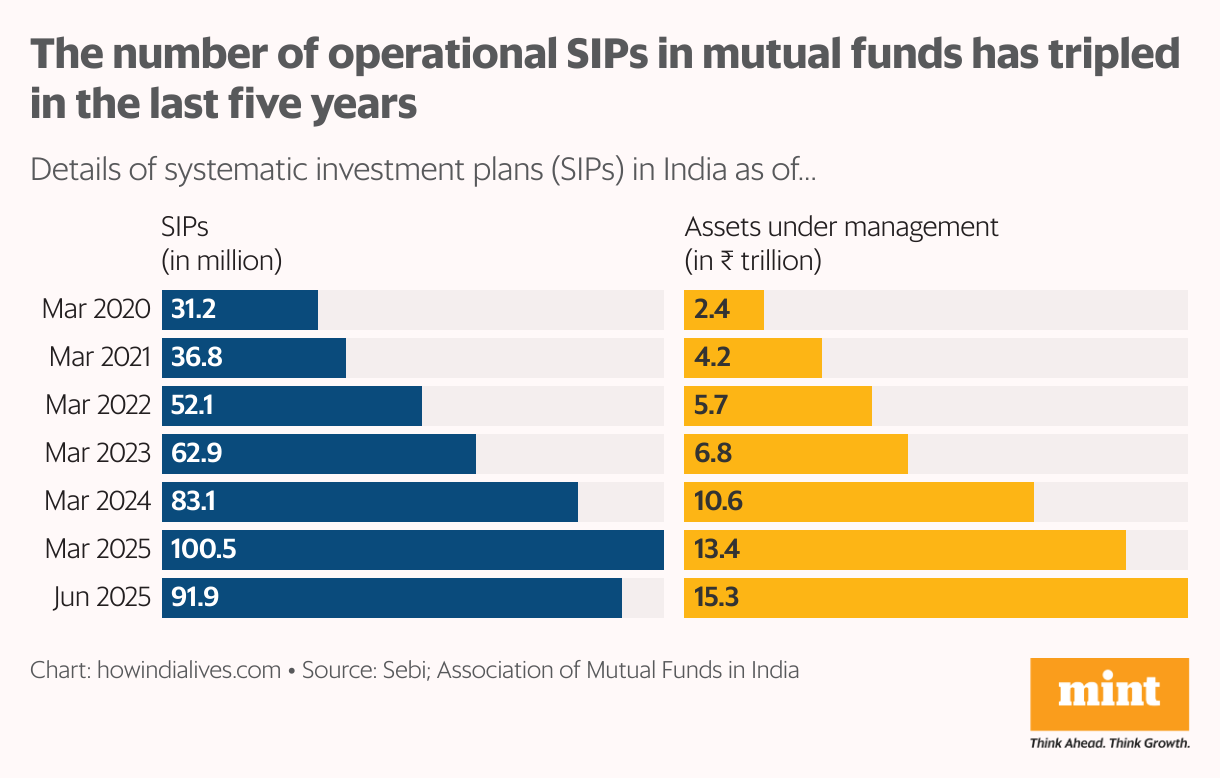
Investors are also holding on to their mutual funds longer. An Amfi-Crisil study showed the share of SIP assets held for more than three years increased from 13% in March 2020 to 52% in March 2025. During this period, 60% of open-ended equity funds beat their benchmark, and nearly 90% delivered compound annual returns above 20%. Given the risk-reward equation, most small investors ought to be long on equities.
www.howindialives.com is a database and search engine for public data

