


—Alexandre Dumas, The Count of Monte Cristo
Sunny days, fresh winds and quiet signs of life mark the onset of spring. Dalal Street was witnessing such a weather last week, until a storm barrelling across the global IT sector darkened the horizons again.
However, those who have weathered many such storms attest that the weather, like the market, has the tendency to return to normalcy. Storms, no matter how severe, should not be mistaken for the climate itself.
A growth-oriented, fiscally prudent budget and the announcement of the long-awaited India–US trade deal have significantly improved the macro backdrop for Indian markets, according to a host of market experts Mint spoke with. These strengthen the case for a medium-term recovery in investor confidence, particularly after a period marked by global risk aversion, foreign outflows and uneven earnings delivery.
That said, experts also add that the path ahead is unlikely to be linear and investors have to adopt a selective approach rather than a blanket risk-on stance, starting with a clear assessment of which segments stand to gain the most from the improving fundamentals.
Sector spotting
The union budget for 2026–27 has hit the right notes on public investment-led growth while resisting the urge to sacrifice fiscal consolidation at the altar of populist policymaking. The fiscal deficit target for FY27 has been pegged at 4.3% of gross domestic product (GDP), slightly lower than last year’s 4.4%, even as it leans on capital expenditure to support growth.
Capital spending allocation for FY27 has been raised to ₹12.22 trillion, or about 3.1% of GDP, with a clear tilt towards transport infrastructure, defence and energy. Higher public capex is expected to underpin economic momentum and crowd in private investment, a key consideration for equity markets as corporate earnings come under closer scrutiny.
In terms of sectors, infrastructure spending continues to dominate. Allocation for roads and highways has been increased to ₹3.10 trillion, an 8% rise over last year’s revised estimates, with a renewed push towards rural road development. Railways has received around ₹2.9 trillion, up 10% year-on-year, alongside the announcement of seven new rail corridors aimed at easing congestion and improving network efficiency. Defence capital outlay has been raised to ₹2.19 trillion from ₹1.86 trillion, supporting modernisation and strengthening domestic defence manufacturing. The budget has also allocated ₹1.85 trillion in interest-free long-term loans to states for capital expenditure in 2026-27, supporting decentralised infrastructure execution.
Beyond core infrastructure, the budget sharpens its focus on strategic and new-age sectors, a point noted by many analysts.
View Full Image
“The budget speech almost begins with the word ‘semiconductors’, which signals a major pivot in the government’s view of what India should pursue. A likely boost to capex, services sector growth and AI, along with slightly slower than expected fiscal consolidation, will likely support FY27 earnings, further helped by increased demand for equities through buybacks,” analysts at Morgan Stanley stated in a note.
The government has outlined Semiconductor Mission 2.0 with an allocation of ₹1,000 crore, while significantly expanding incentives for electronics component manufacturing to ₹40,000 crore from ₹22,900 crore earlier. The India AI Mission has been allocated ₹1,000 crore, supporting compute and data infrastructure.
One aspect that drew an unequivocally negative reaction from the market was the budget’s increase in the securities transaction tax (STT) on futures to 0.05% from 0.02% and on options transactions to 0.15% from 0.1%.
While this led to a howl of protests from many participants, experts say investors should take a reasoned view.
“STT increase for equity derivatives is targeted to curb retail investor speculation,” Yogesh Kalwani, head, investments, InCred Wealth, said. “Sebi had done a study on retail investor activity in Equity F&O and results showed that 91% of retail traders incurred losses. STT increase is a signal that the government and the regulator are not comfortable with high retail participation in derivatives where most people lose money,” he added.
“Capital gains were aligned across different asset classes (listed, private equity, mutual funds, real estate etc.) in FY25 budget and we do not expect any changes in the next few years,” he further said.
The biggest sentiment booster for Dalal Street has been the announcement of the India-US trade deal, which removes a major source of uncertainty that had been weighing on Indian markets for much of the past year.
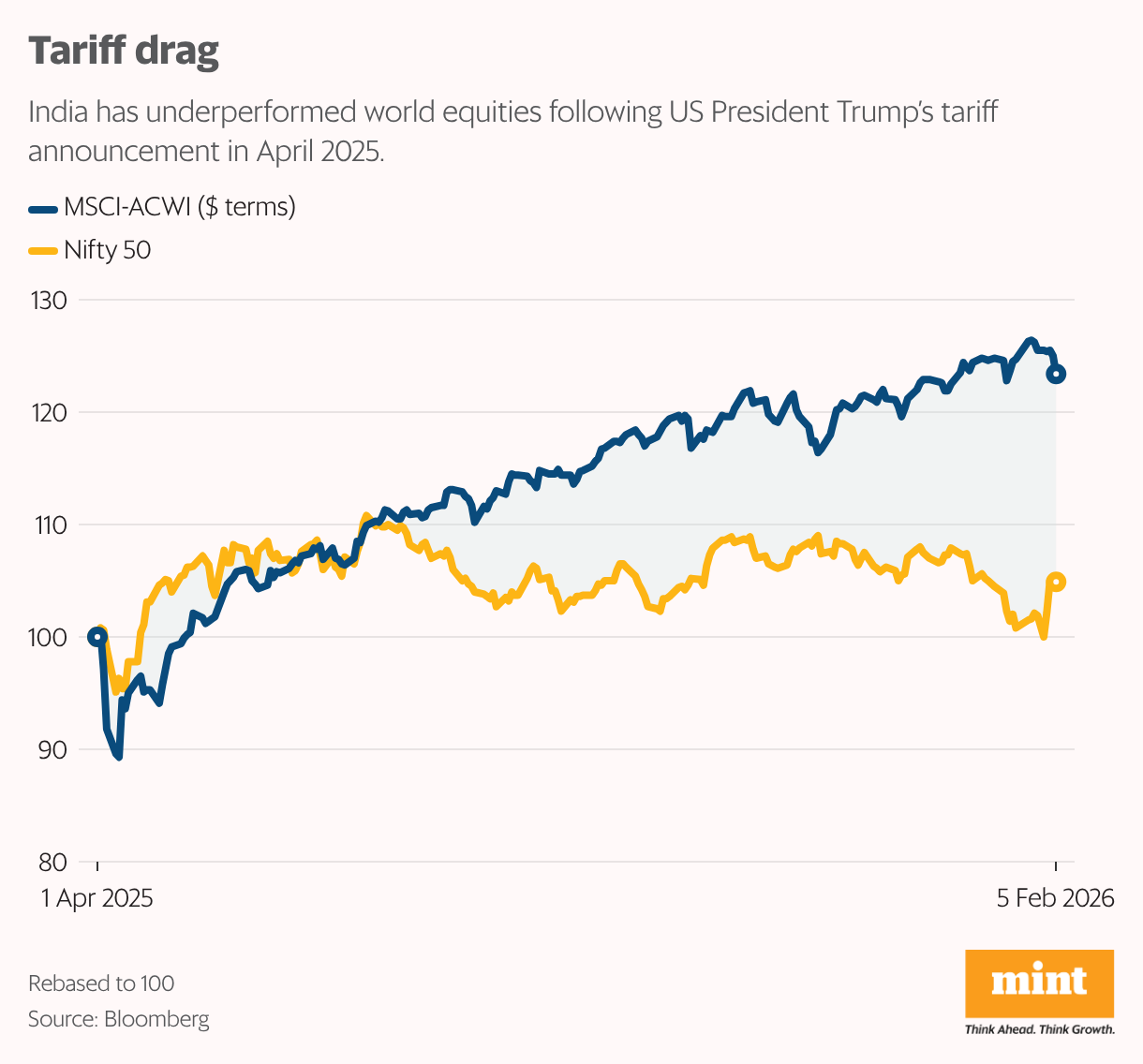
Prolonged ambiguity around bilateral trade and periodic barbs from the Trump administration had contributed to weak investor sentiment and persistent foreign outflows, making the agreement a meaningful inflection point from a market perspective.
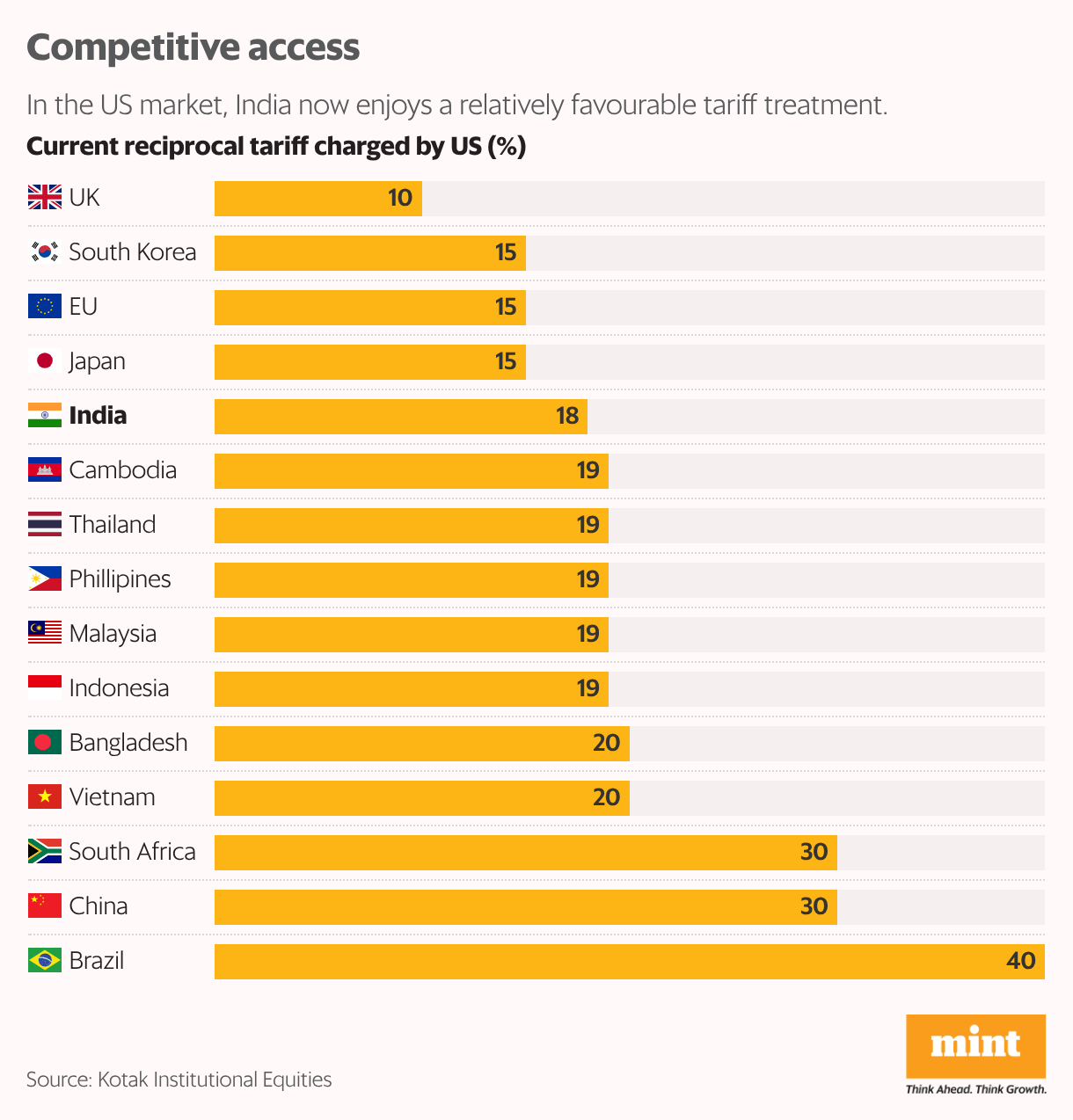
At the core of the deal is a sharp reduction in trade frictions. The US has removed the 25% punitive duty linked to India’s oil trade with Russia with immediate effect, while the reciprocal tariff is set to be lowered from 25% to 18% in the next few days.
Sector-specific tariffs imposed under Section 232 will continue for steel, aluminium and copper at 50%. In auto components, the existing 25% tariff will be eliminated on half the import volume, while the remaining half will continue to attract the same duty. In turn, the US will gain zero-duty access for several products, including Harley-Davidson motorcycles. The agreement remains open-ended, with discussions set to continue and more products likely to be added or removed by mutual consent as talks evolve.
India has also committed to buying $500 billion worth of US goods over five years, including oil, gas, coking coal, aircraft and aircraft parts, precious metals, and technology products. India’s imports from the US stood at $45 billion in FY25.
The agreement also crowns a broader push by India to deepen trade ties across regions. It follows close on the heels of the India–EU free trade agreement and adds to recent deals with the UK, EFTA countries, Oman and New Zealand.
“The overall setup is clearly more comfortable than it was a few quarters ago,” Akshat Garg, head, research & product, Choice Wealth said. “The budget chose discipline over populism, which reinforces confidence in India’s medium-term growth story. Trade deals with the US and EU remove a major source of uncertainty that had been hanging over markets, and the RBI’s growth-supportive stance means monetary policy is no longer a constraint,” Garg added.
That said, all this doesn’t automatically guarantee a strong, broad-based bull run.
“Markets can move on policy comfort for a while, but sustainable rallies ultimately need earnings to deliver. Valuations in parts of the market are already pricing in a lot of good news. If corporate earnings don’t start catching up, the risk is that rallies become narrow and sentiment-driven rather than durable,” Garg said.
So while the foundation looks strong, the next phase depends more on execution and earnings visibility than on announcements.
Deal is done
The US trade deal significantly reduces the effective tariff burden on Indian exports, restoring their competitiveness in the American market. In relative terms, India now faces lower tariffs than most large emerging market exporters, improving its standing across several export categories where pricing and margins had come under pressure.
Combined with the deal with the EU and other regions, the immediate beneficiaries are sectors with direct exposure to these markets.
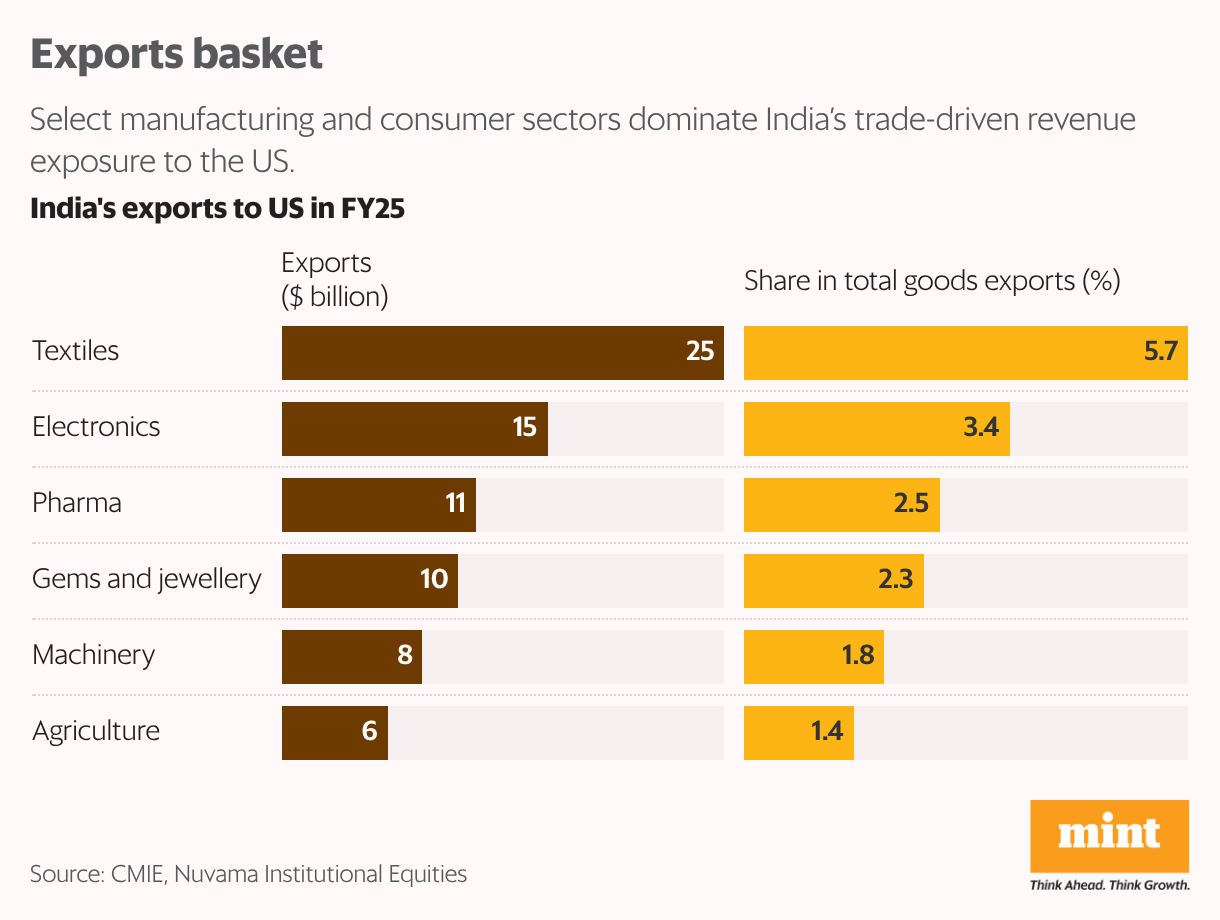
“We believe autos, chemicals, jewellery, wine, textile, electronics, EMS, pharma can be some sectors to look out for given their higher exports to regions like the US and EU,” said Ashwin Patil, head of fundamental research at LKP Securities.
He also said the fine print has to be studied regarding agri imports, which can lead to a huge disruption in India. Commerce minister Piyush Goyal on Saturday said India has ensured carefully crafted exemption lines for products such as dairy items, soyameal, lentils, cereals and millets, among others, while certain quotas have been allocated for the import of items such as tree nuts and apples.
“Otherwise, the earnings so far have been fairly good, which can act as a next leg of trigger for the bull run, given all other macros are in place,” Patil added.
From a broader market standpoint, the US trade deal is expected to trigger a positive cycle with respect to foreign fund inflows. With a key overhang removed, risk appetite towards Indian equities is likely to improve.
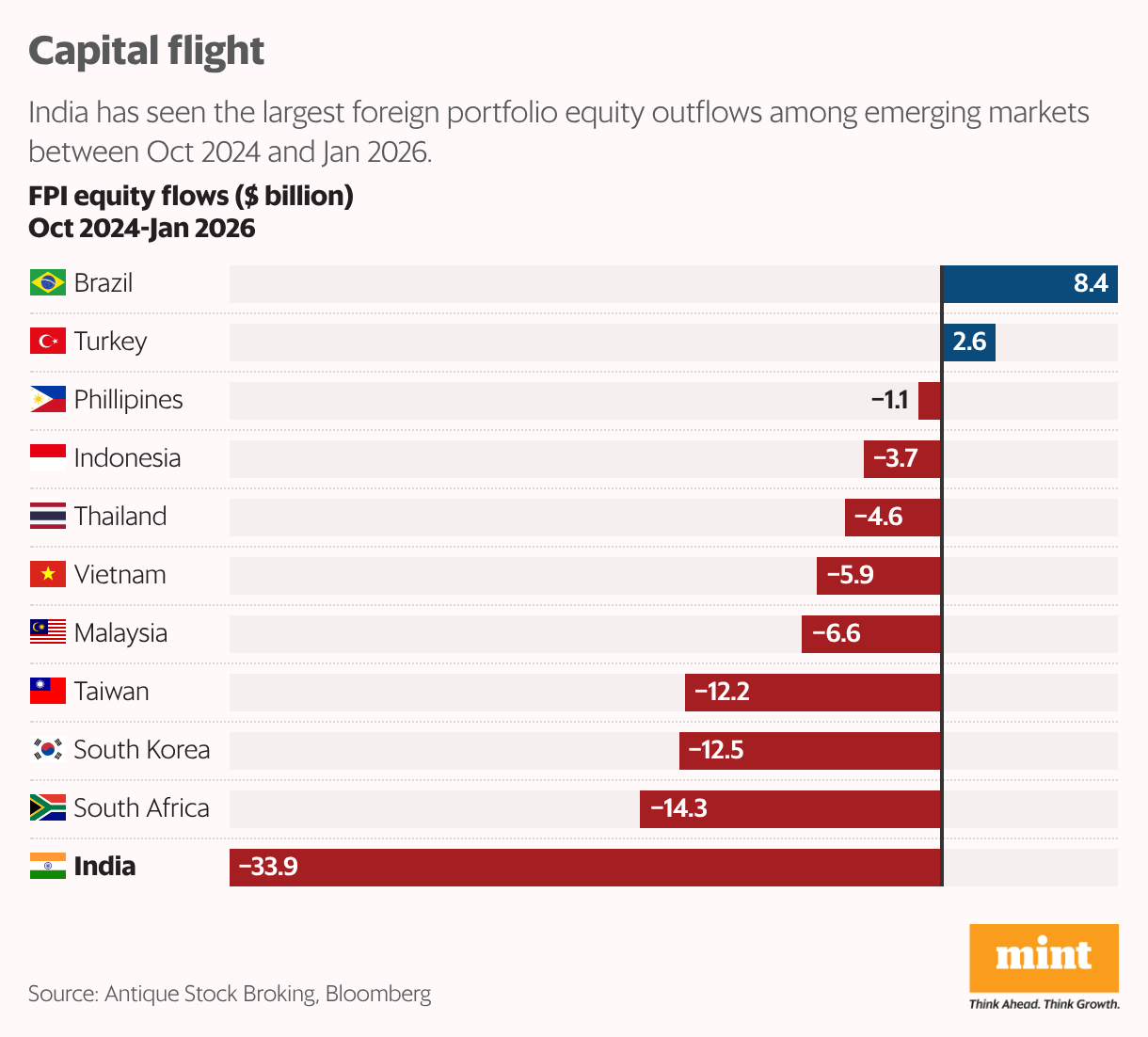
Indian markets have seen equity outflows of about $34 billion since October 2024, the largest among emerging markets, reflecting both global risk aversion and trade-related uncertainty. With the US accounting for roughly 41% of FPI assets under custody and India’s valuation premium over other emerging and developed markets now closer to long-term averages, the conditions for renewed inflows appear more supportive.
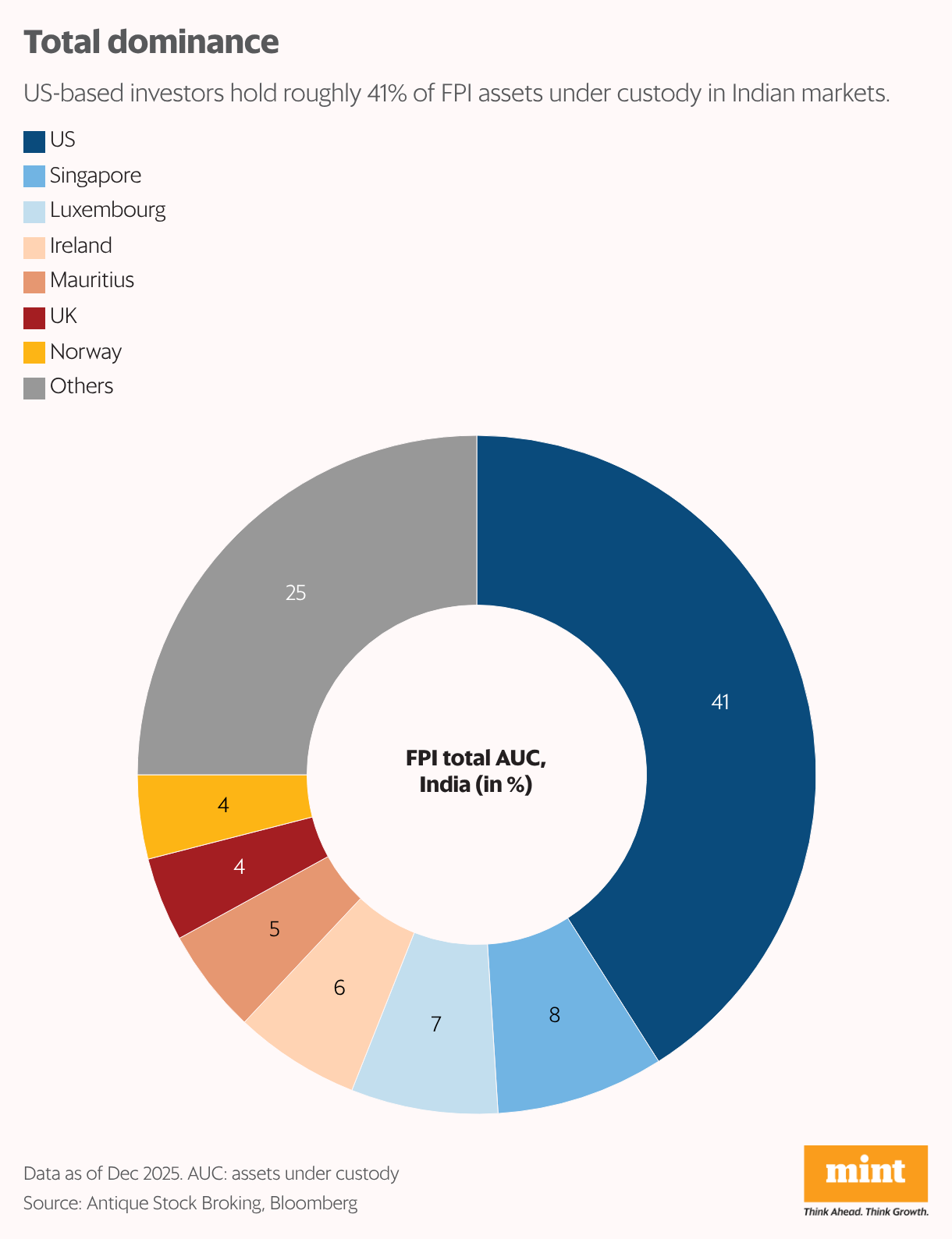
A turnaround in FPI flows would likely favour two sets of sectors. First are areas with relatively high foreign ownership, such as real estate, telecom, transportation, financial services and healthcare, which tend to respond quickly to shifts in overseas investor sentiment. Second are sectors where foreign positioning has been the most underweight over recent years, including capital goods, financial services, IT services and power utilities.
The Indian rupee posted its biggest single-day rise in seven years on 3 February after the deal’s announcement. The currency strengthened 1.36% to about 90.27 per dollar as traders rushed to unwind bearish positions.
“FIIs are likely to come back at some point of time this year. Rupee appreciation will help. Weakening of the AI trade which dominated global markets can accelerate the process. Another important trigger for the FII comeback would be clear signs of earnings recovery in FY27,” V.K. Vijayakumar, chief investment strategist at Geojit Investments, said.
He also said that since sectors oriented towards exports to the US—like textiles, gems and jewellery, auto components, and marine processing—have already appreciated significantly, domestic consumption themes might do better now.
Meanwhile, some participants are of the opinion that FIIs’ return can take longer than expected.
“Foreign investors tend to move based on relative returns, earnings momentum and currency stability. A gradual and selective comeback looks more likely, especially into sectors where earnings visibility improves and valuations remain reasonable. In that sense, the trade deal is a necessary condition for better flows, but sustained inflows will depend on how quickly corporate earnings start to reflect the improving macro environment,” Choice Wealth’s Garg said.
Medium term
The euphoria over the US trade deal barely lasted a day, as Indian IT stocks saw a sharp selloff on 4 February, mirroring an overnight slump in global technology shares as fresh concerns emerged around AI disrupting traditional software and services models.
An updated AI chatbot from Anthropic has heightened fears that automation could eat into low- and mid-level services work, while comments from US-based data and analytics firm Palantir’s earnings call added to the unease. Palantir highlighted how its AI platform is displacing seat-based enterprise software and third-party tools, with some clients eliminating external software altogether.
More importantly for Indian IT services, the company pointed to AI-driven automation in complex ERP and SAP migration projects, compressing timelines from years to weeks—bringing implementation work, previously seen as relatively insulated—into the AI disruption narrative.
While this is incrementally negative for the Indian IT sector, analysts at Motilal Oswal noted that there has been an acceleration in AI partnerships in the industry.
“In the next 3-6 months, we will continue to monitor AI-native partnerships, which will be a key driver in the next 12-14 months. We expect that this should lead to a pick-up in AI services deals in mid-2026 in the form of short-cycle deals,” they added.
That said, most market experts are of the view that the broader macro framework for Indian equities remains intact and investors should not be swayed by short-term bouts of volatility.
“Apart from the trade deals, the benign earnings base and a gradual recovery in economic trends points to a reasonable chance for earnings recovery,” George Thomas, fund manager, equity, Quantum AMC, said. “The tax cuts in recent years would also provide an impetus to consumption in the medium term. Given the correction in broader markets, valuations have become conducive and there are good opportunities for bottom-up stock picking,” he added.
Key Takeaways
- A disciplined union budget has prioritized long-term growth and fiscal prudence over populism.
- Meanwhile, the India-US trade deal has slashed punitive tariffs to 18%, removing a year of uncertainty.
- So, while AI disruption threatens the IT sector, market analysts said that improved macro-fundamentals and falling trade frictions offer high-conviction opportunities for long-term equity investors.
- Experts believe autos, chemicals, jewellery, wine, textile, electronics, EMS and pharma can be some of the sectors to look out for.
- Domestic consumption themes might also do better.
- Some parts of the market are already pricing in the good news.
- If corporate earnings don’t start catching up, rallies could become sentiment-driven rather than durable.

