


In this article we discuss three Indian pharma stocks that have been affected by the news. We wish to emphasise that this is not an analysis of the nature of impact, since the details are unclear. For example, does it exempt companies that already have a manufacturing plant in the US? Are complex generics included?
All we are saying is that these stocks have seen a reaction from investors since the tariff announcement.
#1 Aurobindo Pharma
Aurobindo Pharma specialises in the development, production, and global distribution of a diverse array of generic medications, active pharmaceutical ingredients (APIs), and injectable products, reaching over 150 countries worldwide. It is the largest generic pharma company in the US.
Aurobindo Pharma generates 89% of its sales through exports, with the US contributing 49%. How the 100% tariff on branded products affects the company will be known only once clarity emerges on the specifics.
However, the stock has already reacted negatively to the news, falling from ₹1,097 on 25 September to ₹1,086.90 on 1 October.
The company reported revenue of ₹7,868.1 crore in Q1 FY26, up from ₹7,567 crore a year earlier, while net profit dropped to ₹822.30 crore from ₹919.60 crore.
Aurobindo Pharma is looking to advance its capabilities beyond traditional generics and aims for leadership in high-value complex generics and specialty products.
The company is betting big on complex nasal, respiratory and biosimilars, and is diversifying into the fast-growing biologics contract manufacturing organisation (CMO) space. It’s also expanding its geographical presence, localising manufacturing in China and the US and entering markets such as Indonesia, Canada and South Africa. It’s building supply-chain resilience, integrating backwards with Pen-G and 6-APA facilities that strengthen its API and intermediates base and secure cost efficiencies.
#2 Dr Reddy’s Laboratories
Dr Reddy’s is an Indian multinational pharmaceutical company that initially focused on manufacturing active pharmaceutical ingredients (APIs) but over tim expanded into branded formulations and generics.
The company operates across four main segments: generics (branded, unbranded, and biosimilars), API & services (development, manufacturing, and research support), innovative medicines, and consumer health solutions.
The US accounts for about 46% of total sales, which is one reason why the stock has fallen over the past few days.
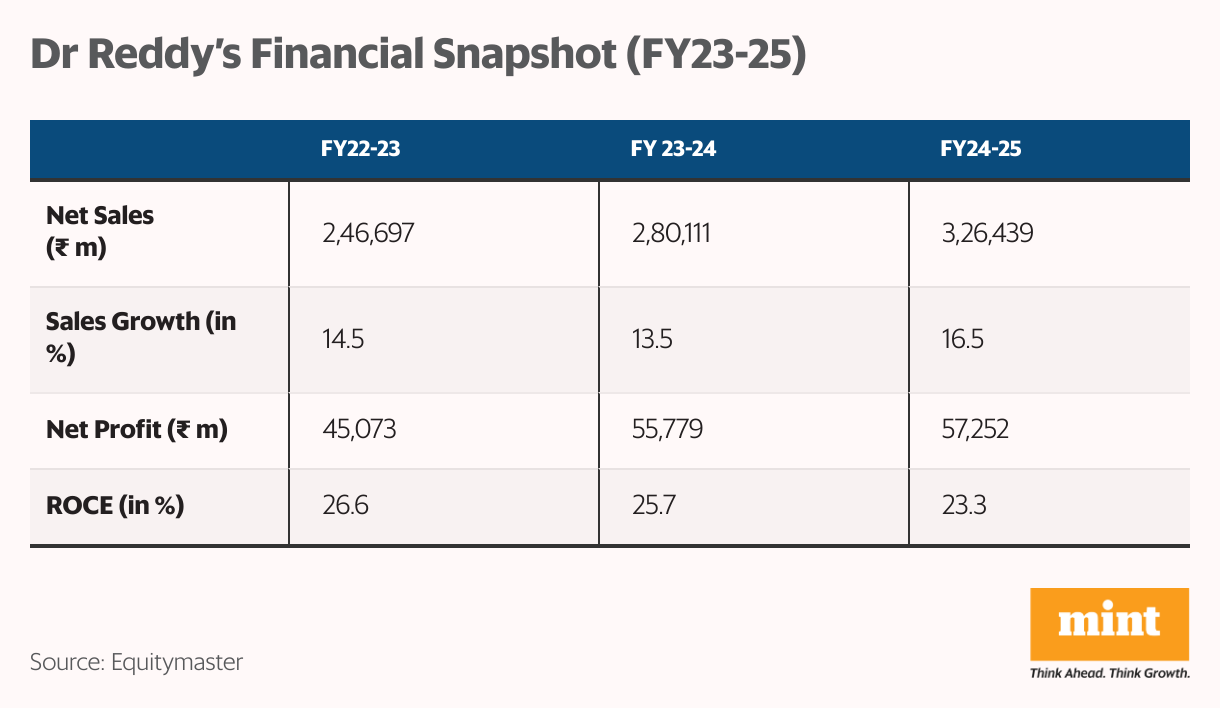
The company reported revenue of ₹8,572.10 crore in Q1 FY26, up from ₹7,696.10 crore a year earlier, while net profit grew to ₹1,409.7 crore from ₹1,386.50 crore.
The company continues to prioritise R&D, investing in complex generics such as peptides, biosimilars and novel oncology assets. Its pipeline, which includes several first-to-market opportunities, positions it well for future growth.
In FY26, Dr Reddy’s plans to grow and strengthen its core businesses, enhance value through portfolio management and strategic differentiation, and scale its presence in consumer healthcare, innovative therapies and biosimilars.
It plans to introduce new revenue streams through acquisitions and strategic partnerships, boost efficiency across the value chain, and streamline structural costs.
#3 Sun Pharma
The company is a global leader in specialty generics, with a portfolio that includes innovative therapies, generic medications, and consumer healthcare products.
It is relatively shielded from Trump’s tariff as it has a significant presence in the Indian market and exports to the US comprise just 31% of its sales. This is perhaps why the stock rose almost 3% on 1 October.
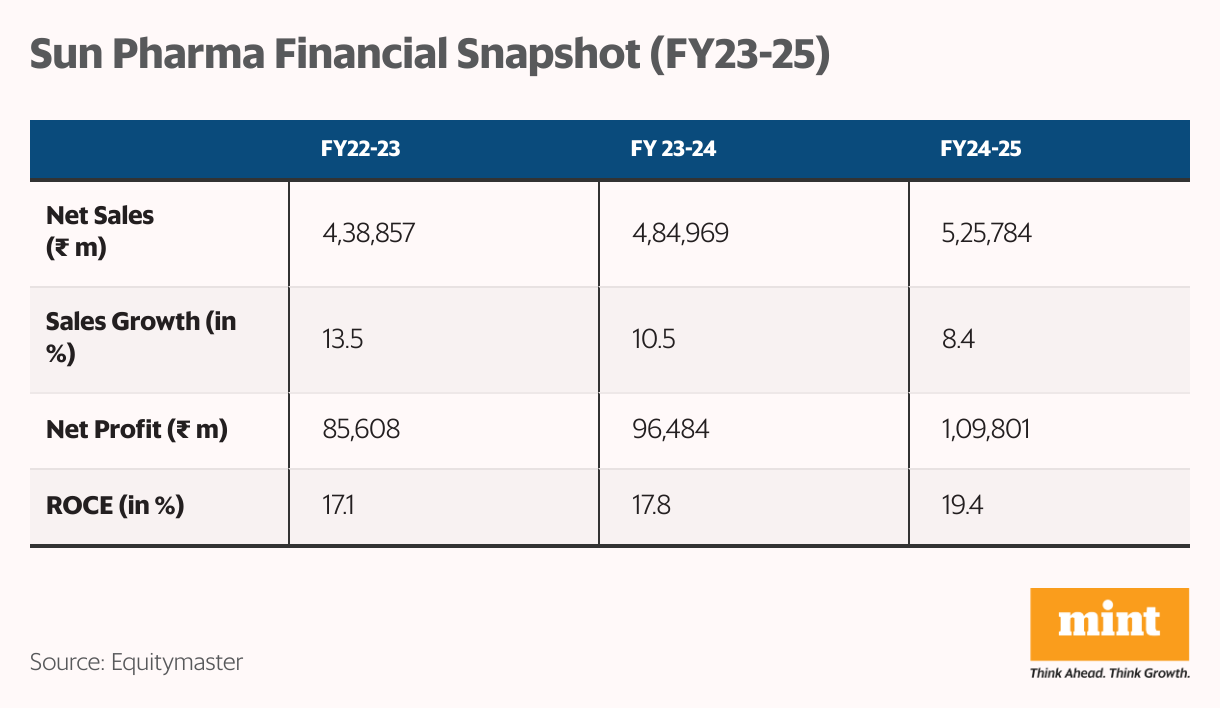
Sun Pharma reported revenue of ₹13,851.40 crore in Q1 FY26, up from ₹12,652.80 crore a year earlier, while net profit dropped to ₹2,302.60 crore from ₹2,871.3 crore.
The company is reducing its dependence on markets where there is price erosion, including the US. Over time, significant price erosion in its generic business in certain markets, including the US, has caused the company to adopt a more conservative approach in those markets. Sun Pharma is now looking to fortify its branded portfolio while remaining cost-competitive in the generics business.
Note: Investors should evaluate a company’s fundamentals, corporate governance, and stock valuation thoroughly before making an investment decision.
Disclaimer: This article is for information purposes only. It is not a stock recommendation and should not be treated as such.
This article is syndicated from Equitymaster.com

