


The BSE Sensex closed the week 0.9% higher at 82,269.78 on Friday, while the Nifty50 advanced 1.1% to 25,320.65. Yet, despite the weekly rebound, the benchmarks ended January in the red.
The Nifty50 lost 2.4% during the month, while the BSE Sensex shed 2.8%, marking their weakest monthly showing since February 2025, when the markets had corrected by around 6%.
Analysts say conviction around a sustained breakout rally remains weak, despite the market pricing in positive cues from the budget on Sunday. Budget-linked sectors such as capital goods, power, defence and public sector units (PSU) rallied through the week.
Investors are betting that the government will step up defence spending, sustain the infrastructure push, and accelerate stake sales in PSUs to boost non-tax revenues, Vinit Bolinjkar, head of research at Ventura, said.
A spike in Brent crude prices to nearly $70 a barrel, amid fears of a potential US-Iran conflict, also lifted oil and gas stocks. These sectors gained 5-7% over the week.
In contrast, fast-moving consumer goods (FMCG) and consumer durables were the top laggards of the week, falling 2-3%. “Investors were concerned that the upcoming budget may not provide significant measures to boost consumption,” Bolinjkar said.
Rising oil prices have also heightened worries over higher input costs, hitting margin-sensitive sectors like FMCG. At the same time, the risk of higher inflation has raised concerns over weaker purchasing power for big-ticket consumer items like durables, he said.
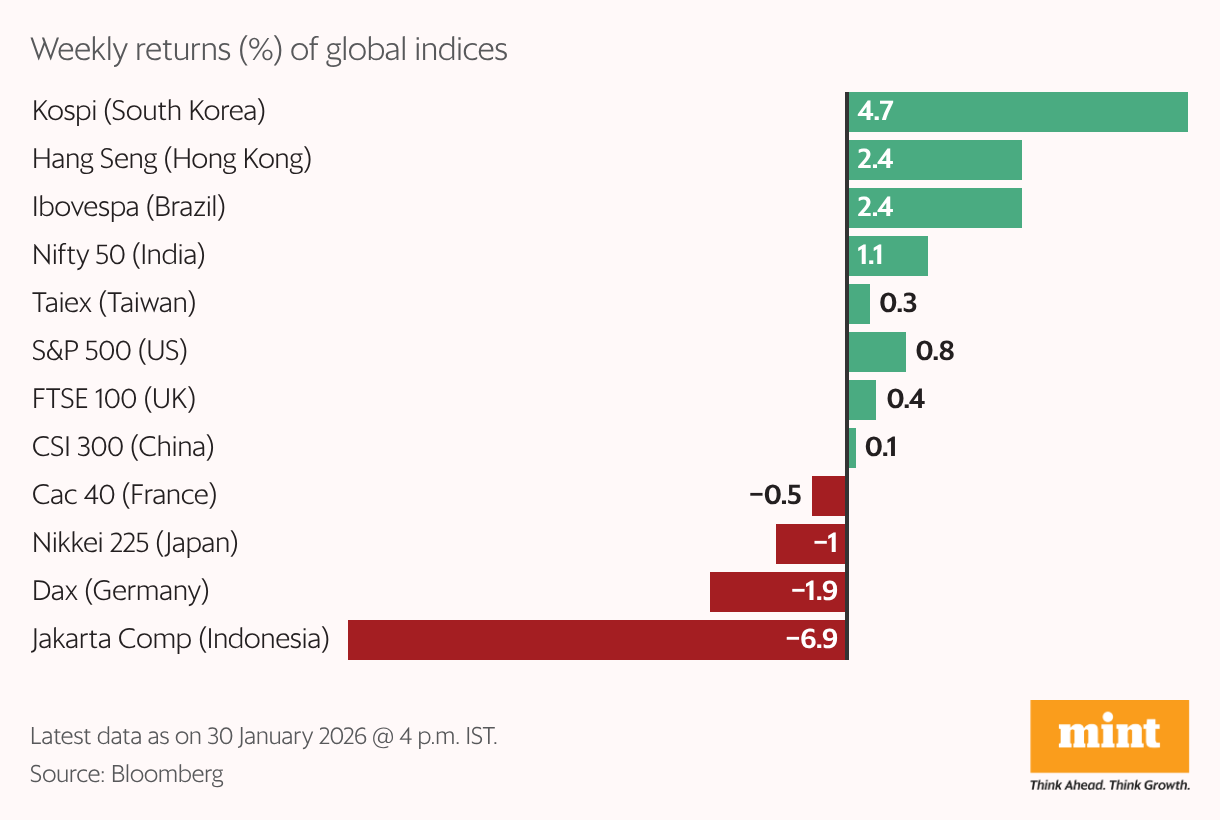
However, Bolinjkar noted that foreign investor outflows remain the key concern for domestic markets, as selling pressure from foreign portfolio investors (FPIs) persisted throughout the week. Even so, pre-budget positioning offered some support, helping India rank among the top four global markets this week alongside South Korea and Hong Kong.
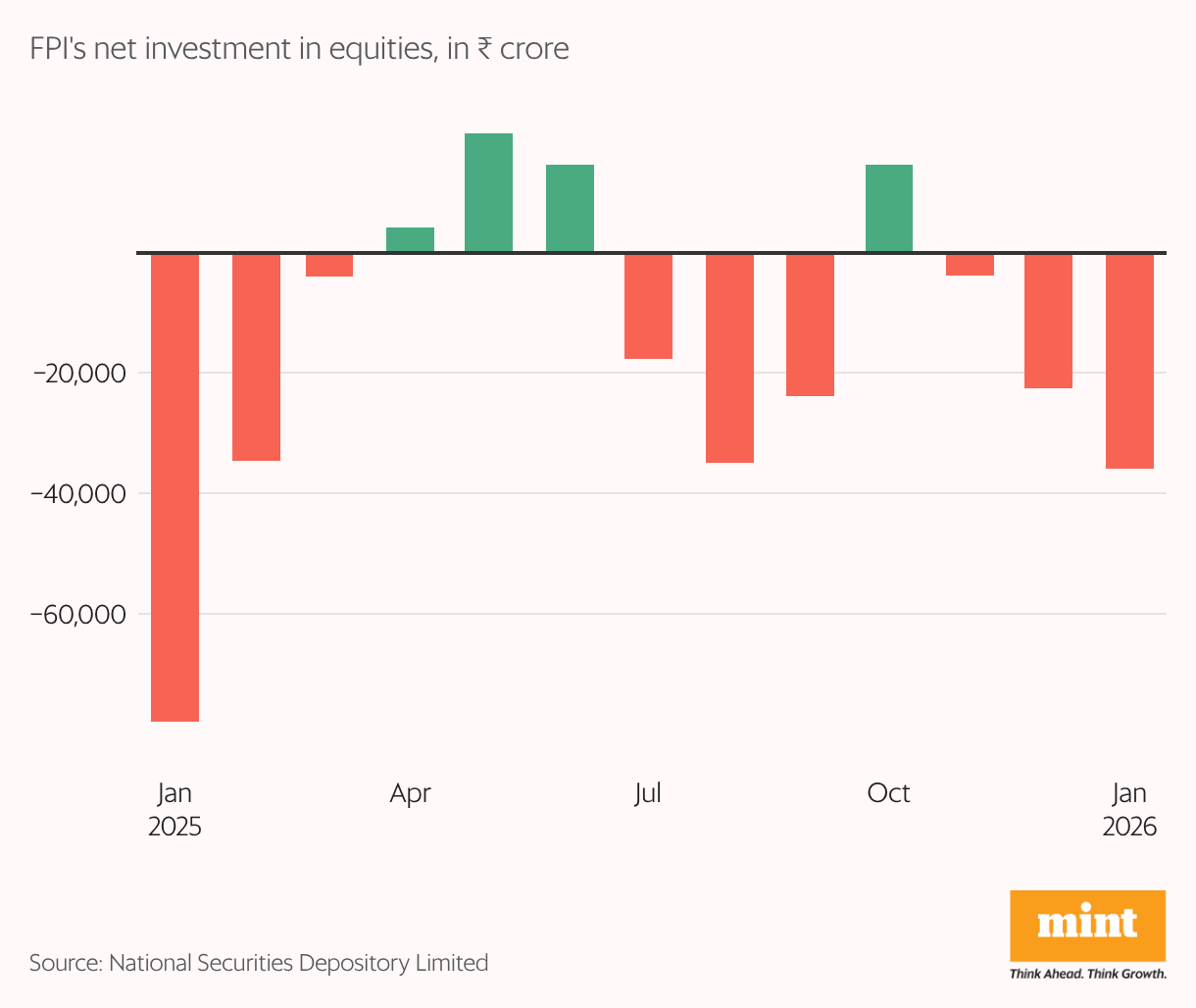
Yet, current data suggests FPI sentiment remains weak, potentially limiting the market’s ability to sustain this week’s outperformance. FPIs sold nearly ₹36,000 crore worth of Indian equities in January, marking their largest monthly outflow in a year. This follows equity outflows of ₹78,027 crore in January 2025.
Rising global uncertainty, a lack of meaningful improvement in corporate earnings, and more attractive artificial intelligence (AI)-linked opportunities in other emerging market peers, have driven foreign capital away, experts said. “Additionally, foreign investors remain cautious due to delays in the India-US trade deal and lingering tariff threats,” Bolinjkar added.
India and the EU on Tuesday concluded negotiations for a landmark free trade agreement, involving two billion people and creating a $27-trillion market, which accounts for 25% of global GDP. India has offered tariff concessions on 97.5% of imports from the EU while the EU has dropped tariffs on 99.5% of India’s exports.
What’s next
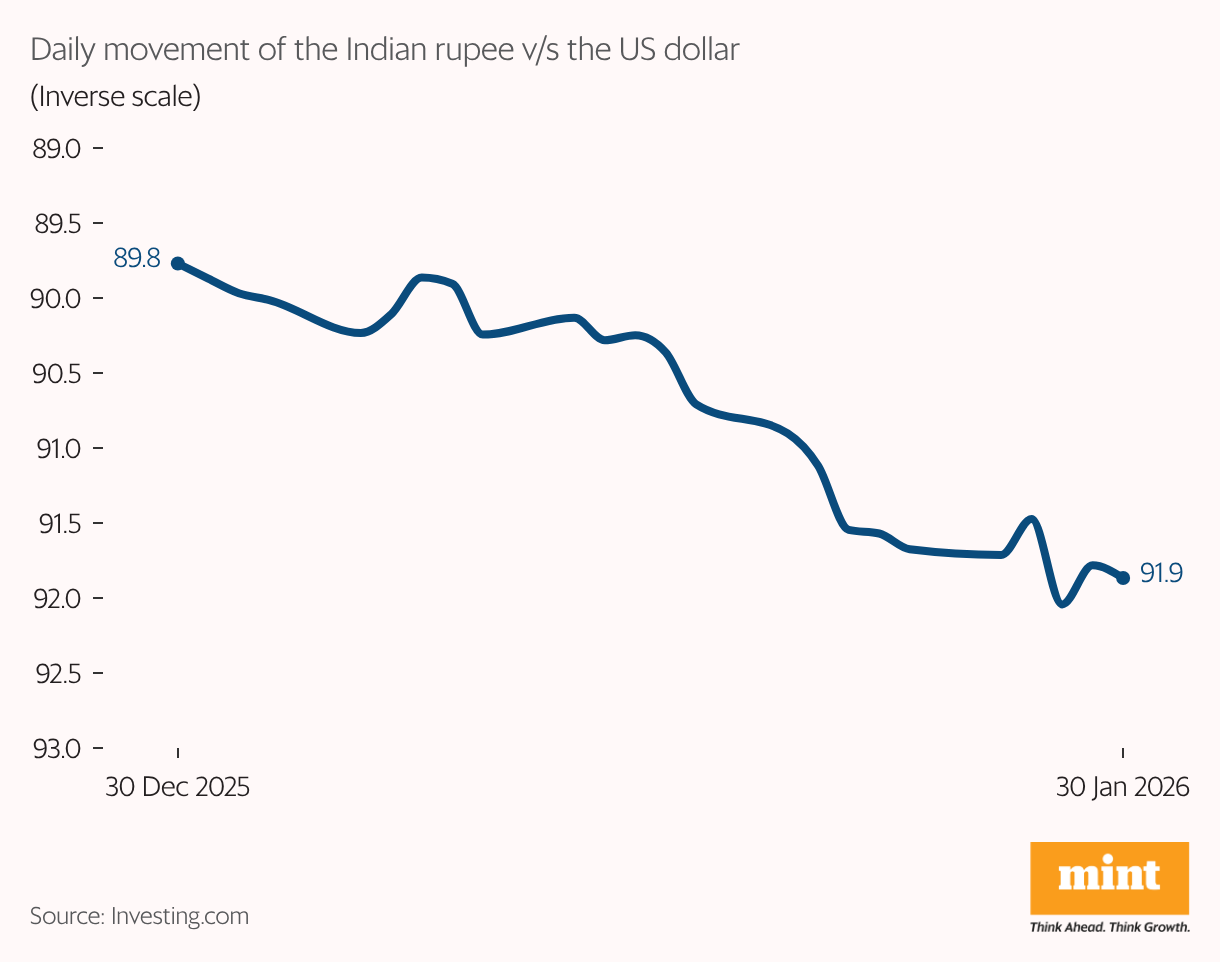
Bolinjkar said the rupee’s persistent depreciation against the US dollar has further intensified FPI selling. As foreign investors sell domestic equities, demand for dollars rises. This weakens the rupee, increases costs of hedging and erodes FPI returns, which in turn prompts more outflows. The Reserve Bank of India’s intervention to curb the rupee’s fall tightens liquidity, making equities less attractive and reinforcing this negative feedback loop, he said.
The rupee depreciated 2.3% in January, touching an all-time low of 91.88 against the dollar.
The market eagerly awaits cues from the Union budget. “Any changes in tax structure or sectoral incentives will have a significant impact on market sentiment,” he said.
Bolinjkar highlighted that the RBI’s upcoming monetary policy committee meeting could determine the market’s next direction. While the RBI is widely expected to hold the policy rate at 5.25%, investors will focus on its guidance on liquidity and rupee volatility, he added.

